
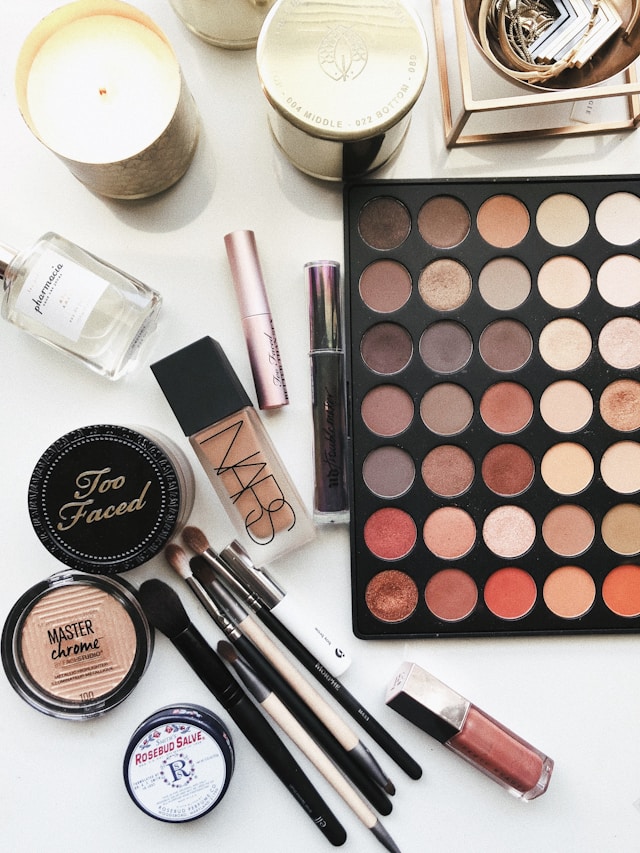
The beauty industry in 2026 has moved past simple “filters.” The rise of professional-grade Augmented Reality (AR) makeup testing has turned smartphones and smart mirrors into high-precision labs. For the modern enthusiast or professional, this “Virtual Vanity” allows for hyper-realistic simulations of textures, finishes, and pigments that react to real-world lighting. This guide explores how to navigate these advanced tools to refine your look with scientific accuracy without ever opening a physical product.
The Evolution of AR Beauty in 2026
Earlier versions of AR makeup often looked like “stickers” overlaid on the face. In 2026, the technology uses Neural Radiance Fields (NeRF) and Subsurface Scattering to simulate how light passes through layers of product. A matte lipstick now absorbs light, while a dewy foundation reflects it based on the actual light sources in your room.
This level of realism is powered by 3D Facial Mesh Tracking, which identifies over 2,000 landmark points on your face. This ensures that when you smile, speak, or blink, the virtual makeup moves with your skin, maintaining the illusion of a real application.
Choosing Your Professional Platform
To get “Professional-Grade” results, you must move beyond social media filters and use dedicated beauty engines.
-
YouCam Makeup (Perfect Corp): Still the industry leader in 2026, it offers a library of over 1,000 branded products. Its AI Smart Shade Finder analyzes your skin’s undertones in real-time to suggest the exact foundation match across multiple high-end brands.
-
ModiFace (L’Oréal): This engine powers most luxury brand apps. It is specifically optimized for Multi-Spectral Imaging, allowing it to simulate how makeup looks under different lighting conditions—such as “Office Fluorescent,” “Golden Hour,” or “Evening Candlelight.”
-
Sephora Virtual Artist: This is the best tool for Tutorial Integration. It doesn’t just show you the look; it provides a spatial “overlay” that maps out exactly where to place contour, highlight, and shadow on your unique bone structure.
Step-by-Step: Conducting a Professional Test
-
Neutralize Your Environment: For the most accurate color matching, stand in front of a window with natural, indirect light. Avoid harsh overhead yellow lights, which can trick the AI into misidentifying your skin’s warmth.
-
Calibrate Your Skin: Most professional apps now include an AI Skin Analysis phase. Before applying makeup, let the app scan for hydration, texture, and redness. This data allows the AR to simulate how a product will “settle” into your specific skin type over several hours.
-
Test the “Finish,” Not Just the Color: In 2026, you can toggle between Matte, Satin, and Shimmer. Use the “Swivel” feature to move your head side-to-side; observe if the shimmer particles in a virtual eyeshadow catch the light realistically.
-
The Wear-Simulation: Advanced tools now offer a “Time-Lapse” preview. This uses AI to predict how a foundation might oxidize or how a lipstick might fade after “virtual meals” or four hours of wear, helping you choose long-lasting formulas.
Virtual Artistry for Content Managers and Freelancers
If you are managing beauty-niche websites or providing consulting services, the Virtual Vanity is a massive productivity booster. It allows you to create high-quality “Face Charts” and promotional visuals without the cost of physical samples. You can export your AR trials as 3D Look Files, which can be shared with clients or used as a reference for real-world photo shoots.
Furthermore, many platforms now support WebAR, meaning you can integrate these try-on experiences directly into your own websites. This increases user engagement and reduces return rates by giving your audience the confidence to see the product on their own face before clicking “buy.”
Privacy and Ethical Data Use
Because these apps scan your facial biometrics, privacy is paramount. In 2026, professional tools utilize On-Device Processing. This means your facial map stays on your phone and is never uploaded to the cloud. When selecting a virtual vanity tool, always check for the “Edge Privacy” badge, ensuring your biometric data is siloed and deleted once the session ends.
The Future: Holographic Mirrors and AI Stylists
As we look toward 2027, the Virtual Vanity is moving into the home through Smart Mirrors. These devices use 5G to provide a “Zero-Latency” reflection where you can change your entire look with a voice command. Proactive AI stylists are also emerging, which look at your digital calendar, see that you have a “Formal Dinner” at 8:00 PM, and automatically suggest a makeup look that complements both your outfit and the venue’s lighting.
Conclusion: Mastery of the Digital Glow
The Virtual Vanity has turned makeup testing from a messy, trial-and-error process into a precise digital science. By mastering these AR tools, you save time, reduce product waste, and achieve a level of professional polish that was previously impossible without a personal makeup artist. Whether you are prepping for a high-stakes meeting or creating content for your web empire, the ability to test and refine your look in the “Digital First” world is a modern essential. Step into the screen and discover the future of your own reflection.

Welcome to Alpha Core.
I’m Alex Morgan, a content writer with over 3 years of experience in research-based and educational writing.
Here, I share clear and reliable information to help readers understand complex topics with confidence.

